
How To Speak the Truth in Love
Truth without love is brutal. Love without truth is betrayal. Discover 5 practical steps to speak biblical truth with grace in difficult conversations.

The Balancing Act We All Struggle With
I’ve gotten it wrong both ways.
There was a time I spoke truth without love. I was blunt, harsh, and more concerned with being right than being helpful. I watched someone’s face fall, saw the walls go up, and realized too late that my words, though true, had done more harm than good.
And then there was the time I offered love without truth. My response was soft, affirming, careful not to offend. I smiled and nodded and said what the person wanted to hear. They walked away feeling validated, but no closer to freedom.
Both times, I failed. Because truth without love is brutality. And love without truth is betrayal. Real love holds truth and gentleness in the same hand. And that struggle envelops the path we’re all learning to navigate.
What Does “Speaking the Truth in Love” Actually Mean?
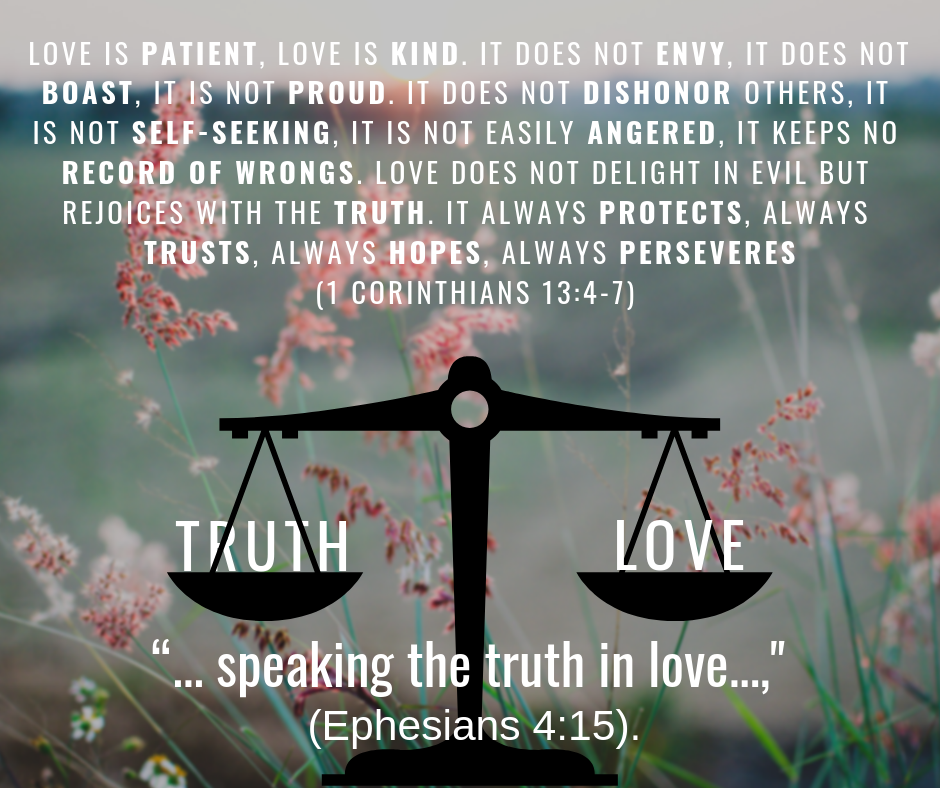
Ephesians 4:15 is often quoted but rarely practiced well: “Instead, speaking the truth in love, we will grow to become in every respect the mature body of him who is the head, that is, Christ.”
Notice that truth and love aren’t opposites. They’re partners. And they’re both necessary for the spiritual maturity of ourselves and others. If we’re not growing and improving and bettering ourselves every day, we’re not accepting the truth in our lives. We’re probably not helping others grow either.
Speaking the truth in love means:
- You care enough to be honest, even when it’s uncomfortable.
- You speak with the other person’s good/growth in mind, not your own agenda.
- Your tone, timing, and approach reflect Christ’s character, not just correct theology.
- You’re willing to stay in relationship, even when the conversation gets hard.
It’s not about choosing between being nice and being honest. It’s about being both, intentionally.
The “Truth” Side of the Equation
Some of us lean heavily on the love side, avoiding hard conversations because we don’t want to hurt anyone. But truth-telling is an act of love.
Proverbs 27:6 says, “Wounds from a friend can be trusted, but an enemy multiplies kisses.” You don’t want to be an enemy.
Real friends tell you when you have spinach in your teeth. When your behavior is destructive. When the path you’re on leads somewhere you don’t want to go. They risk discomfort because they care about you more than they care about keeping the peace.
If you love someone, don’t lie to them, even by omission. Don’t let them believe something false because the truth might sting. And don’t watch them walk off a cliff just to avoid an awkward conversation.
Love tells the truth. Always.
The “Love” Side of the Equation
And then there are those of us who lean hard on truth, forgetting that how we say something matters as much as what we say. You can be 100% theologically correct and 100% relationally destructive at the same time.
1 Corinthians 13:1 reminds us, “If I speak in the tongues of men or of angels, but do not have love, I am only a resounding gong or a clanging cymbal.”
Truth without love is just noise. It might be accurate, but it’s not helpful. It doesn’t heal or invite transformation; it just wounds. Love means:
- You check your motives. Are you speaking to help or to win?
- You consider timing. Is now the right moment, or should you wait?
- You soften your tone. Can you say this with humility instead of superiority?
- You stay engaged. Are you willing to walk with them through the process, or are you just dropping truth bombs and walking away?
When Silence Is Actually Unloving
Here’s where it gets uncomfortable. Sometimes, the most loving thing you can do is say the thing no one else will say.
I think about the woman at the well in John 4. Jesus didn’t sugarcoat her situation. He didn’t avoid the uncomfortable truth about her relationships. He named it directly. But He also didn’t shame or condemn her. He offered her living water in the middle of calling out her sin.
That’s the model. Direct, but not condemning. Clear, but not cruel. Imparting TRUTH: The Right Understanding To Honor, to gently encourage someone to grow.
If you see a friend making choices that dishonor God or harm themselves, staying silent isn’t loving. It’s cowardly. It’s prioritizing your comfort over their wellbeing. Real love speaks up. Gently, humbly, prayerfully—but it does speak.

5 Practical Steps for the Hard Conversations
So how do we actually do this? How do we navigate the tension of being both grounded and gracious?
1. Pray First
Before you say anything, pray. Ask God to examine your heart. Ask for wisdom, humility, and the right words. Ask Him to prepare the other person’s heart to receive what you need to say.
James 1:5 promises, “If any of you lacks wisdom, you should ask God, who gives generously to all without finding fault, and it will be given to you.”
2. Speak From Relationship, Not Position
Truth lands differently when it comes from someone who has earned the right to speak into your life. If you don’t have a relationship with this person, think carefully about whether you’re the one to have the conversation. And if you do speak, make sure they know you’re for them, not against them.
3. Use “I” Statements
Instead of “You’re wrong about this,” try “I’m concerned because…” or “I’ve noticed this pattern, and I care about you, so I wanted to bring it up.” It’s less accusatory and more invitational.
4. Leave Room for the Holy Spirit
You’re not responsible for convincing or converting anyone. You’re responsible for speaking truth lovingly and leaving the rest to God. Plant the seed. Water it with prayer. Trust God for the growth.
5. Be Willing to Be Misunderstood
Even when you do everything right, there’s a chance your words will be misunderstood or rejected. That’s okay. Your job isn’t to control the outcome. It’s to be faithful and obedient.
Grace for the Mess
Oh, and don’t worry. You won’t always get this right. You’re going to speak too harshly sometimes. Too softly at other times. You’ll say the wrong thing, at the wrong time, in the wrong way.
Welcome to being human.
But God’s grace covers our fumbling attempts at obedience. He honors the heart that wants to honor Him, even when the execution is imperfect. So keep trying. Keep learning. Keep asking God to shape your words and your heart.
The world doesn’t need more people who are just nice. It needs people who are grounded in truth, overflowing with love, and willing to have the hard conversations with humility and grace.
Be that person.
Because when we speak the truth in love, we reflect the heart of Jesus. And that’s how hearts are changed, lives are transformed, and the body of Christ grows stronger.