3 Lessons on Growing: How to Let Go
I kept a journal from my early twenties that I reread a few years ago. It was my way of measuring how well I’d been growing in my faith, in my spiritual walk, in life.
I’m not sure what I was expecting. Maybe some nostalgic warmth, a few cringe-worthy fashion references, the general amusement of visiting a younger version of yourself from a safe distance.
What I actually found was a bit harder to face.
The same fears, almost word for word, showing up entry after entry. The same insecurities cycling through in different costumes. The same prayers about the same struggles, sometimes years apart, with the same anguished tone each time. They were there in ink, as if I were encountering them fresh in each entry, rather than returning to them for the hundredth time.
I sat with that journal for a long time, delivering some level of conviction and compassion toward my younger self. Because I could see something from the outside that I clearly couldn’t see from the inside back then. I had been holding on to things I needed to release. But letting go felt more dangerous than the weight.
That’s when it hit me. Growing isn’t just about what you add. It’s about what you’re finally willing to release.
What the Pruning Actually Removes
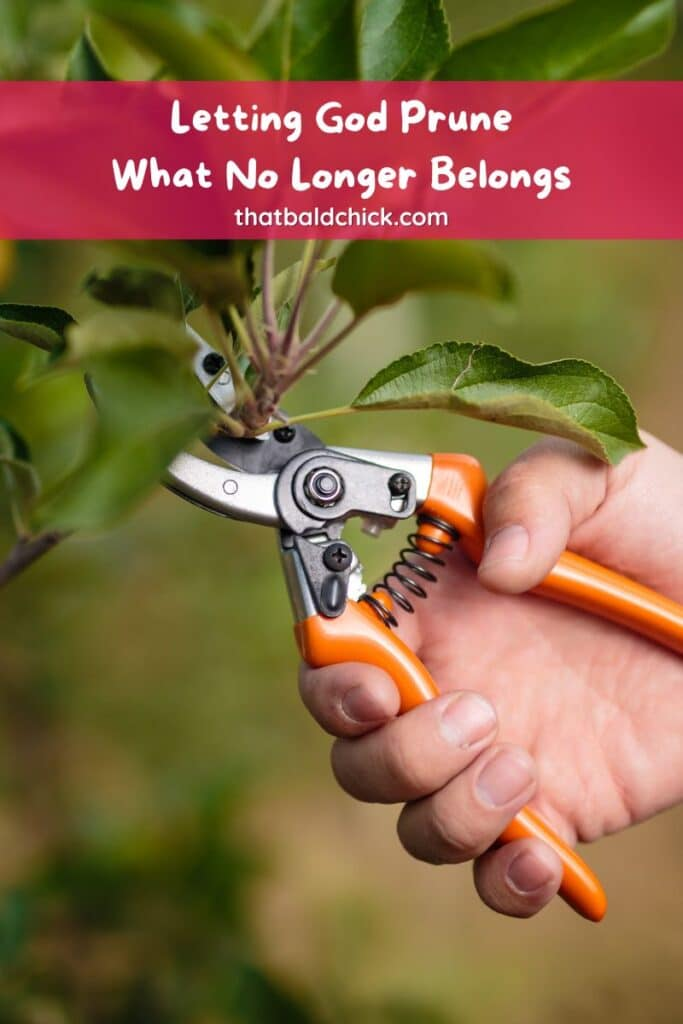
We talked earlier this month about pruning. The way God tends the branches that are already bearing fruit, cutting back so they can produce more. But there’s another kind of releasing that growing requires. It’s less about what God removes and more about what we’re gripping.
Old identities that no longer fit. The version of yourself that was defined by a wound, a failure, a season that has genuinely passed. Thought patterns that once protected you and now just limit you. Grudges that have become such familiar furniture you’ve stopped noticing the space they take up.
None of these things feel optional to carry. What we grip tightly always feels necessary. The fear feels like wisdom. The old identity feels like honesty. The grudge feels like self-protection.
But Hebrews 12:1 calls them what they are: “Let us throw off everything that hinders and the sin that so easily entangles.”
Did you read that? Everything that hinders. It’s not just the obvious sin. It’s the weight that isn’t technically wrong but is genuinely slowing you down. The thing you’ve been dragging that was never meant to come this far with you.
Letting Go in Your Growing Causes Grief
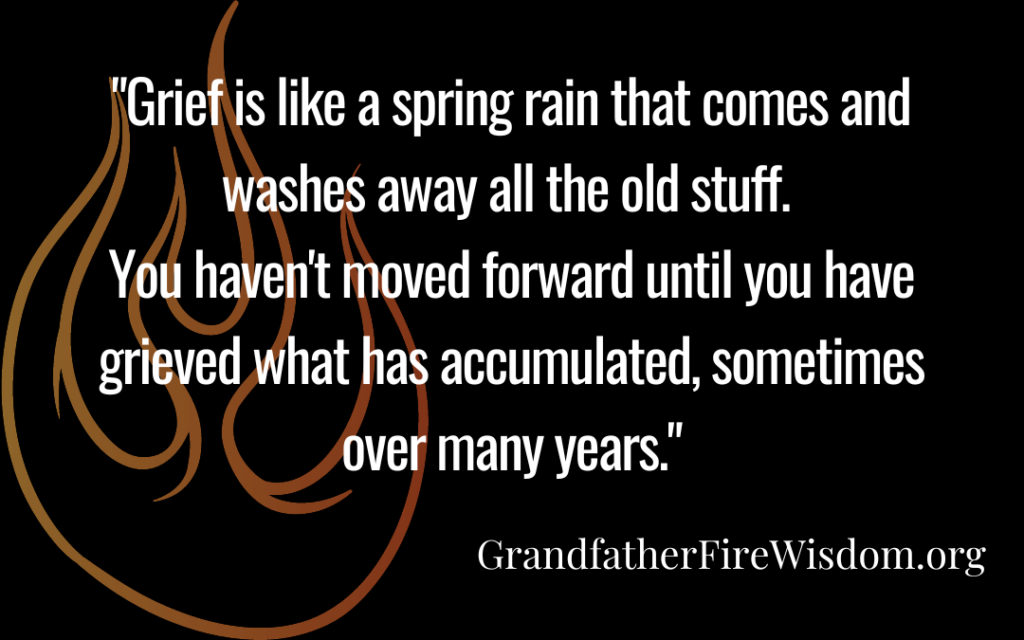
I really wish someone had told me this earlier. It would have saved me a whole lot of time trying to define the feelings that happened while I was trying to grow. Are you ready for it? Letting go is a grief, even when what you’re releasing was hurting you.
We don’t talk about this enough in conversations about spiritual growth. We talk about freedom and lightness and the relief on the other side, which is real. But the moment of release itself? That one of actually unclenching the hand? It can feel like loss even when it’s healing.
The journal I reread held a version of me I had quietly been protecting. Letting her go, releasing the narrative I’d built around those old fears and insecurities, meant acknowledging that I had spent years carrying something I could have put down sooner. That’s a hard pill to swallow.
But here’s something I’ve learned. The grief of letting go is not a sign you’re doing it wrong. It’s just the honest cost of becoming something new. The snake doesn’t enjoy shedding its skin. The tree doesn’t feel nothing when the dead branch falls.
Growing costs something. It’s all part of the process.
What Gets to Grow in the Space

The beautiful thing about release is what ends up growing in the space it leaves behind.
I picked up that journal again recently, a few years after that first difficult reread. And what struck me this time wasn’t the familiar fears cycling through. It was how quiet those particular fears have gotten. They haven’t gone completely silent. But they’re quieter. Less frantic. Less in charge.
Something had grown in the space I’d cleared. Something steadier, more rooted, less dependent on outcomes I couldn’t control. I wouldn’t have been able to see it if I hadn’t first seen what I was carrying.
Psalm 1 describes a tree whose leaf does not wither. That kind of enduring rootedness doesn’t happen by accumulation alone. And it doesn’t happen by accident. It happens by staying connected to the Source, and by releasing, over time, everything that was drawing water away from the roots without giving anything back.
This month, our theme is GROW — Get Rooted On the Word. And sometimes the Word does its deepest work by showing us what we’ve been carrying that we were never meant to hold this long. And although it might feel like it, that’s not condemnation. That’s the kindness of a gardener who knows exactly what the roots need.

Join the Conversation
Is there something you once worried about constantly that you rarely think about anymore? Maybe a fear, a struggle, an insecurity that just quietly lost its grip over time? What changed? Share in the comments. Your story might be exactly the hope someone else needs to hear right now.
What you’re still gripping, what you suspect you’ve been carrying longer than necessary, what letting go might actually cost you? That’s journal territory. Write it honestly. You don’t have to have it resolved to write it down. Sometimes naming it is the first act of release.