
A Genuine Discovery for the First Time
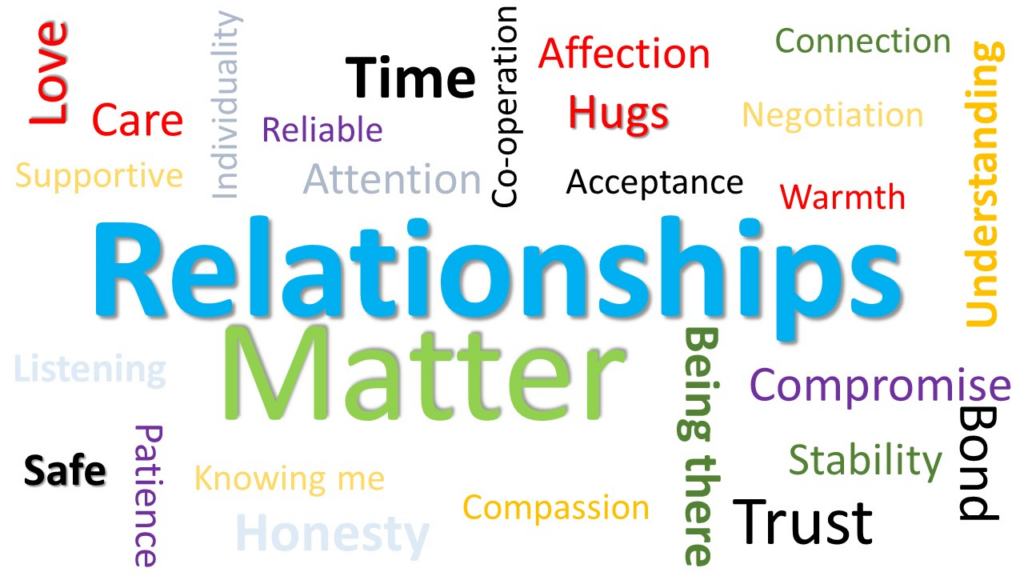
I have a tendency to treat independence as a goal. But this habit didn’t develop as a result of pride. Instead, it came from learning early that needing people came with risks. If you could handle things yourself, you couldn’t be let down by someone else’s failure to show up. If you kept your needs manageable and your asks small, you stayed safe from the particular disappointment of reaching out and coming up empty.
For a long time I called that strength. I was capable. I was reliable. I didn’t require much. All of these felt like compliments.
What I didn’t see was the cost. The slow, accumulating cost of a life lived at arm’s length from genuine connection. Relationships stayed pleasant and surface-level and carefully managed. I was present enough to seem engaged but guarded enough to stay untouched. But the full life I was theoretically living had a hollow place in the middle of it. I had gotten so good at working around that empty feeling, I’d almost stopped noticing it was there.
It wasn’t until my usual buffers got stripped away in a rather challenging season that I started to realize what I’d been missing. The fullness I needed would only be found in the relationships I’d been avoiding.
Made for More Than Managed Distance
John 17:3 defines eternal life as knowing God and Jesus Christ. Not knowing about them. Knowing them. The intimate, personal, nothing-held-back kind of knowing that is the opposite of managed distance.
And here’s what strikes me about that definition: if the fullness of life is rooted in genuine knowing — real relationship, real presence, real connection — then it makes sense that the fullness we experience horizontally, with other people, would follow the same logic.
We were not designed for managed distance. We were designed for the kind of knowing that requires proximity and vulnerability and the risk of being seen in our actual state rather than our curated one.
Ecclesiastes 4:12 adds a layer to the familiar two-are-better-than-one argument: “A cord of three strands is not quickly broken.” The strength isn’t just in the pairing. It’s in the weaving together — the kind of intertwining that happens when people are actually close enough to hold each other through something.
You can’t weave at arm’s length. Connection requires proximity. And proximity requires the willingness to be known.
What Connection Actually Produces
I want to be specific here, because I think the case for community sometimes gets made in vague, aspirational terms that don’t quite land as practical reality.
Here’s what genuine connection actually produces in a life, in concrete terms:
It produces truth-telling you can’t generate alone. The people who know you well enough to see your blind spots and love you enough to name them gently are irreplaceable. You cannot get that from a podcast or a book or a quiet time, however good those things are. You can only get it from someone who has been close enough, long enough, to see what you can’t see about yourself.
It produces resilience you couldn’t build in isolation. The research on this is remarkably consistent — people who have strong relational connections navigate hard seasons better, recover faster, and sustain hope longer than people who face the same circumstances alone. That’s not sentimentality. That’s how we were designed to function.
And it produces joy that multiplies in a way solitary joy doesn’t. The best moments of my life have almost all been shared ones. Not because the moments themselves were extraordinary, but because experiencing them with people I love made them fuller than they would have been alone.
That’s the relational dimension of the full life. And it’s not a bonus feature. It’s built into the design.
The Risk Worth Taking
I know that connection is not uncomplicated. I know that proximity means exposure and exposure means the possibility of being hurt by the very people you let close. I’ve lived that. It’s real, and it deserves honest acknowledgment rather than a breezy dismissal.
But I’ve also lived the alternative — the carefully managed distance that keeps you safe and also keeps you, in a very specific and significant way, not quite full. And given the choice between the risk of connection and the guaranteed cost of isolation, I’ll take the risk.
Not recklessly. Not without wisdom about who gets access to what. But genuinely — with the willingness to be known, to let people close enough to actually help carry things, to stop treating independence as an unqualified virtue and start treating it as one tool among many rather than the whole strategy.
The full life is a connected life. Not perfectly connected, not painlessly connected, but genuinely, vulnerably, actually connected. And that kind of connection starts with one small step toward someone rather than away.
This month, our theme is LIFE — Living in Full Expectation. And living in full expectation includes expecting that the fullness God promises has a relational shape to it — that it flows through connection, through community, through the particular grace of being known and loved by actual people in your actual life. That’s not a secondary feature of the full life. It might be one of its primary ingredients.
Join the Conversation
Here’s this week’s question: What’s one quality you most value in a close friendship — the thing that makes you feel most known and most yourself when it’s present? Share it in the comments — we’d love to hear what genuine connection looks like to you in the everyday details.