Obedient Faith Guaranteed to Set You Free
I grew up hearing the word obedience in contexts that made it feel heavy. Do this. Don’t do that. Follow the rules or face the consequences. But that’s not obedient faith. And for a long time, even after I came to faith, that don’t-question-obedience followed me into my relationship with God.
I obeyed because I was supposed to. Because the alternative felt risky. Because somewhere underneath it all I had quietly confused obedience with compliance, and compliance with love.
A conversation with a close friend really changed my understanding and perspective. She said, almost offhandedly, “I don’t obey God because I have to. I obey Him because I trust Him more than I trust myself.”
Once my brain processed what she had said, it hit me hard.
What Obedient Faith Actually Means
Obedient faith isn’t just following a bunch of rules all dressed up in spiritual language. It’s actually the visible evidence of trust.
When you genuinely believe that God knows more than you do, sees further than you can, and loves you more completely than anyone else ever will, obedience is the most reasonable response in the world. You simply can’t help it.
Psalm 90:17 grounds this beautifully: “May the favor of the Lord our God rest on us; establish the work of our hands.” That’s like saying, God, I’m bringing You what I have and asking You to make something of it. That posture of hands open, heart willing is obedient faith in its most practical form.
Obedient Faith Honors the Relationship
As a writer, there have been seasons where I’ve felt God nudging me toward a project or a direction that didn’t make obvious sense from a career standpoint. No guaranteed audience. No clear path to publication. Just a quiet, persistent sense that this was the next thing. A lot like the posts I write for this blog, or even my author blog.
Obedient faith in those moments didn’t always come with an obvious or reliable ROI (return on investment). It looked like opening a new document and starting anyway. It looked like trusting that if God was in the nudge, He’d be in the work and the result, too.

And every single time I’ve responded that way, something happened that I couldn’t have produced or made happen on my own. Not always what I expected, but always something that showcased the fingerprints of a God who was present in my obedience.
John 14:21 puts it plainly: “Whoever has my commands and keeps them is the one who loves me.” Obedience and love aren’t separate things. One is the expression of the other.
What Obedient Faith Is Not
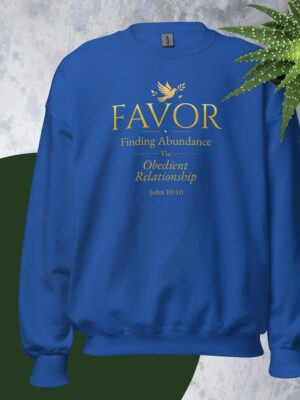
This month’s FAVOR theme makes it clear that obedience doesn’t mean subservience or slavery. It means responding to a genuine and abiding relationship built on respect, trust, and gratitude.
That difference matters a lot. A servant obeys because they have no choice. A child obeys a loving parent because they’ve learned that parent can be trusted. A friend follows through on a commitment because the relationship is worth honoring.
That’s the kind of obedience God invites us into. He doesn’t want fearful compliance, although a lot of people obey out of fear, keeping God distant and impersonal. What He actually wants is a faithful response. The natural overflow of a heart that has experienced His goodness and wants to keep walking close to the One who provides it.

Join the Conversation
Has obedience ever felt more like a burden than a response to love? What shifted that for you, or what do you wish would shift?
Spend a few minutes journaling or recording a voice memo finishing this: “When I think about obedience, I used to feel _____, but what I’m learning is _____.” That shift in framing might be exactly where God wants to meet you today.