The Truth About Abundance in Life
I had a very specific picture in my head of what a full life would look like. Of when I’d know I was living in abundance.
I’m not sure exactly when I formed it. Probably somewhere in the middle of expectations, plans, and quiet assumptions that build up over years without you really noticing. But it was there. A fairly detailed internal image of what things would look like when they were “right.” When life was full. When I had arrived at the version of things that felt complete.
Some of it came true. Some of it didn’t. And some of what came true turned out to feel different than I expected once I was actually standing in it.
A bit reluctantly, I realized my picture of fullness had been built on a set of assumptions that were more cultural than scriptural. More on what I perceived than what was actually true. That the fullness Jesus was talking about in John 10:10 and the fullness I had been quietly chasing were not exactly the same thing. And that gap between them explained more of my low-grade restlessness than I had realized.
What Jesus Actually Promised About Abundance
John 10:10 is one of those verses that gets quoted so often it can start to lose its edges. “I have come that they may have life, and have it to the full.”
Some versions use the word abundance, so let’s take a moment to unpack that.
It doesn’t mean your circumstances improve when you hope they will or the provision you requested arrives how you expected or the life you pictured finally clicks into place. Jesus said this to people who were, by most measurable standards, not living easy lives. The promise wasn’t comfort. It wasn’t the absence of hardship. It wasn’t a guarantee that things would look a certain way from the outside.
The fullness he was describing was something else entirely. John 17:3 gives us the clearest definition Jesus himself offers: “Now this is eternal life: that they know you, the only true God, and Jesus Christ, whom you have sent.”
Fullness, according to Jesus, is knowing him. Not knowing about him, but knowing him. The way you know someone you are in actual relationship with. The way knowledge becomes familiarity becomes trust becomes the kind of presence that impacts every other aspect of your life.
That’s a different kind of full than the one most of us were picturing.
The Restlessness That Points Somewhere

Augustine wrote something in the fourth century that has been resonating with people ever since: “Our heart is restless until it repose in Thee.”
That line describes something I recognize all too well. The restlessness of a person who has good things and still feels like something is missing. Who has checked the boxes that were supposed to produce fullness and found they didn’t quite make it. Who keeps reaching for the next thing hoping that one will finally satisfy the ache.
That restlessness is a signal. It’s pointing toward the One who is the source of the fullness we need, not a substitute for it.
Isaiah 55:1-3 adds more specifics to this invitation: “Come, all you who are thirsty, come to the waters; and you who have no money, come, buy and eat… Why spend money on what is not bread, and your labor on what does not satisfy? Listen, listen to me, and eat what is good, and you will delight in the richest of fare.”
The restlessness isn’t the enemy. It’s the belief in how we define abundance. The question is whether we follow the restlessness to the right source or keep trying to satisfy it with things that were never designed to hold that weight.
Redefining Fullness and Abundance
So, what does fullness look like now?
Not in the version of life you pictured years ago. Right now. In the actual season where you’re living, with the actual circumstances you’re living, with the actual relationship with God that exists today rather than the idealized version you haven’t quite reached yet.
Fullness might look quieter than you expected. Less dramatic. Less Instagram-worthy. More ordinary and more deeply satisfying at the same time. Kind of how a meal made from good ingredients doesn’t need to be elaborate to be genuinely nourishing.
Psalm 23:1 says it so simply, but it often takes a lifetime to fully absorb it: “The Lord is my shepherd; I shall not want.”
Not I shall not want once things improve. Not I shall not want when the picture finally matches what I imagined. I shall not want. That’s the present tense, current season, right now. Because of who the shepherd is.
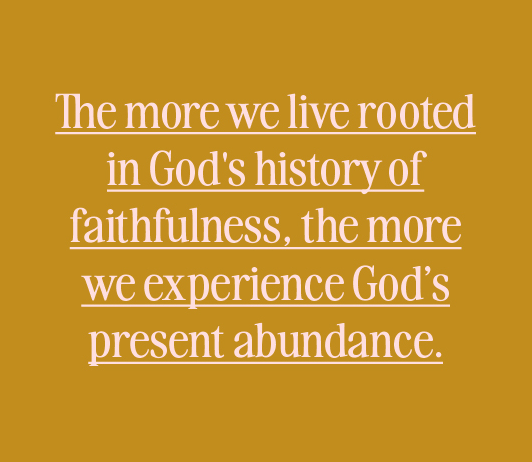
That fullness and abundance is available now, not later. It’s the kind that starts with knowing him rather than arriving somewhere.
This month, our theme is LIFE — Living in Full Expectation. And the expectation isn’t that circumstances will align perfectly. It’s that the God who promised life to the full is present and active in the life you’re already living. And that fullness is closer than you think.

Join the Conversation
If you had to describe what a “full” day looks like for you, what would be in it? This doesn’t have to be a perfect day, just a genuinely full one. Share in the comments. We’d love to hear what fullness looks like in the everyday details of your life.
If you have been struggling with the gap between the life you pictured and the one you’re living, the restlessness you’ve been trying to name, or what you’re still reaching for that hasn’t satisfied, try jotting down a few thoughts in a journal. It’s often the right place for that kind of honest inventory. Write the real version of the question: what does fullness look like for me, right now, today?